
What does it take to run a successful food business? In a fast-moving industry, that answer changes in the blink of an eye. Stay ahead of trends, breaking news, and business strategies by tuning in to educational sessions, hosted by SFA in collaboration with experts from every corner of the food industry.
SFA members enjoy exclusive free access to participate live in SFA webinars, ask questions, and get personalized guidance from the speakers.
Hear From Top Companies






Upcoming Webinars
Recaps & On-Demand Streaming
-
Consumers react differently to price changes across categories, retailers, and even package sizes. Newer specialty brands often have higher price sensitivity, meaning a small price increase can cause a larger drop in sales volume.
What You Can Do
-
Test small price changes at one retailer or region before adjusting broadly.
-
Identify your “no-go” price thresholds (e.g., $5.99 vs. $6.49) to avoid instant volume drops.
-
Use retailer conversations to request store‑level price data. You don’t need expensive tools to start learning elasticity trends.
-
Choose your pricing model intentionally:
-
Value-based pricing works best for premium, story-driven specialty foods.
-

-
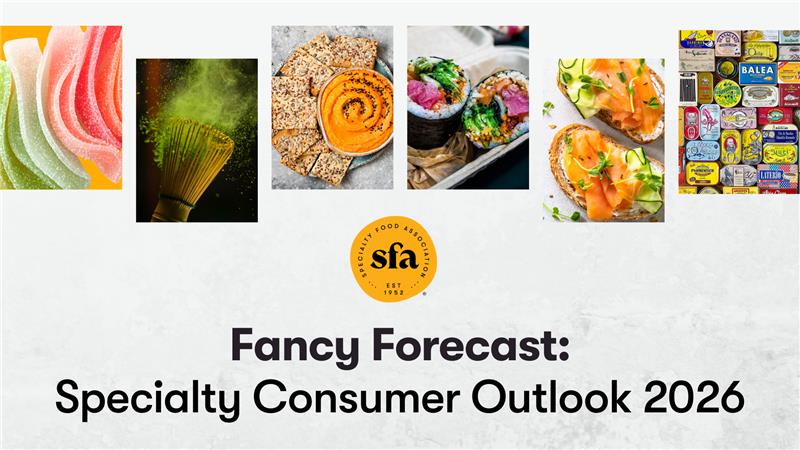
SenseMaxxing is SFA's 2026 Trend of the Year, reflecting consumers’ desire for vivid, multisensory food experiences that counterbalance lives lived on screens. Dive deep into this key trends and five additional consumer shifts SFA is watching this year—Rooted Rituals, Honest Processing, Appetite Reset, Shelf Stable Chic, and Promiscuous Palate—in our recent webinar.
Want the full report? Click here (instant access for SFA members, available via request form for non-members): https://www.specialtyfood.com/education/2026-trends/
-
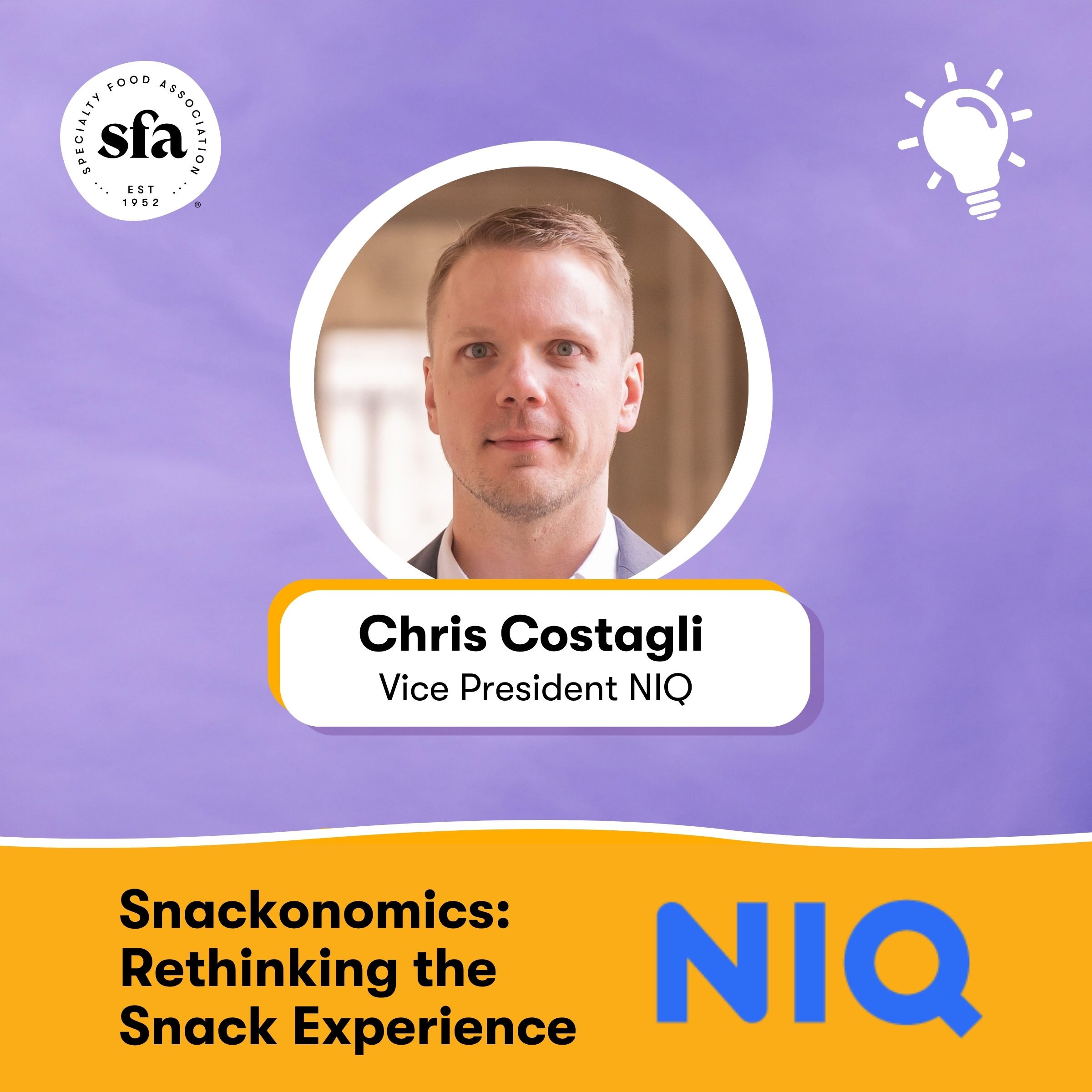
Snacking isn’t just about satisfying hunger—it’s a reflection of evolving lifestyles, emotional needs, and a growing demand for transparency. Industry expert Chris Castigalli (NIQ) unpacks the seismic shifts happening in the snacking landscape.
Consumer Motivations & Behaviors
Snacking is driven by emotions, lifestyle, and seasonal habits.-
Reasons include hunger, stress, pleasure, habit, and loneliness.
-
Gen Z snacks more due to isolation.
-
Homemade snacks are rising with inflation and health goals.
-
41% buy more during seasonal launches (e.g., Halloween, Super Bowl).
-
GLP-1 users snack intentionally, seeking indulgent yet health-supportive options.
Health & Nutrition Awareness
Consumers are prioritizing clean ingredients and nutritional value.-
25% seek snacks free from artificial ingredients.
-
GLP-1 users prefer high-protein, low-sugar snacks.
-
41% have stopped buying brands over ingredient concerns.
Technology & Discovery Tools
Apps and social media are reshaping how snacks are found and evaluated.-
Tools like Yuka and AI help scan, assess, and order snacks.
-
Younger consumers use social media and apps for discovery.
Product & Category Evolution
Snacking now includes drinks and reflects broader lifestyle shifts.-
Includes smoothies, functional waters, and mocktails.
-
Snacking is a behavior, not just a category—brands must innovate and build trust.
Policy & Economic Factors
Policy changes and economic pressures are impacting snack access and sales.-
SNAP reductions are changing food access.
-
Waivers excluding candy and soda could risk $11B in sales.
-
-
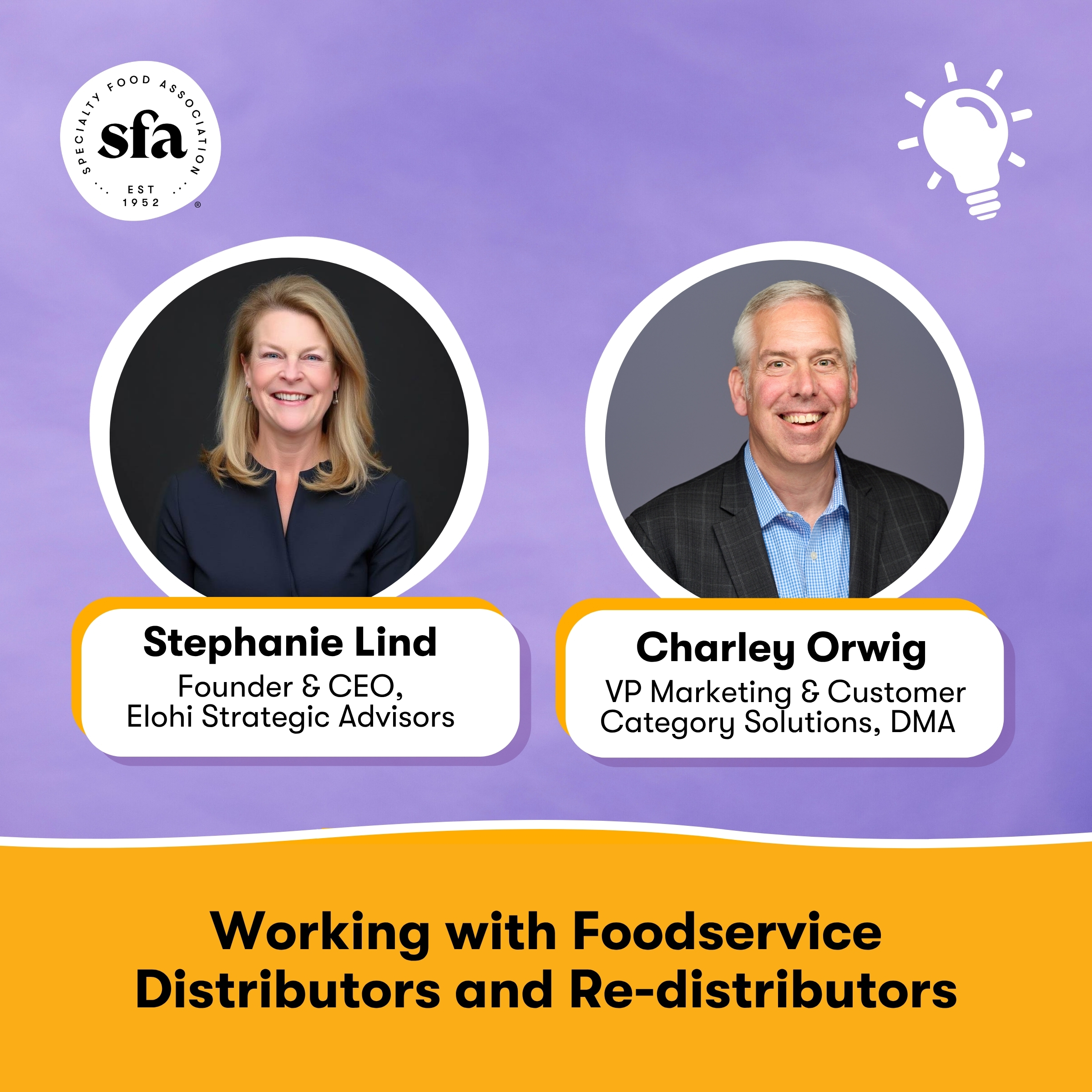
Foodservice is a $1.5 trillion industry, making up 58% of consumer food and beverage spending. But for many manufacturers, especially those used to retail, entering this space can feel overwhelming.
Experts Stephanie Lind, Elohi Strategic Advisors, and Charlie Orwig, Distribution Market Advantage, Inc. broke down the essentials of foodservice distribution and offered actionable insights for brands looking to grow in this channel.
Key Takeaways:
-
Foodservice ≠ Retail: Unlike the structured world of retail, foodservice is fragmented and “chaotic” (Stephanie’s word!) with over 2,500 distributors and 1.5 million locations.
-
Start Simple: Launch with a focused SKU strategy tailored to foodservice needs. Be ready to deliver immediately.
-
Three Pillars of Success: Understand the roles of suppliers, distributors, and operators. Success depends on aligning with all three.
-
Build Relationships: Cold emails rarely work. Face-to-face meetings and warm introductions are key to getting noticed.
-
Push vs. Pull Strategy: You need to create demand with operators (pull) while equipping distributors to sell your product (push).
-
Insights Matter: Distributors and operators value data, but it must be relevant to their business, not just consumer trends.
-
-
Step into a bold new era of trade shows with the Winter FancyFaire*, a reimagined experience from the Specialty Food Association designed to spark innovation, connection, and culinary discovery. Held in vibrant San Diego, this event offers exhibitors a powerful platform to launch new products, engage with top-tier buyers, and immerse themselves in a dynamic food-forward community.
What’s Inside the Guide:- Why Winter FancyFaire? Discover how this event sets the tone for the year, offering first-to-market exposure and a fresh West Coast vibe.
- Immersive Onsite Activations: From Discovery Point demos to the Spotlight Shop retail showcase, exhibitors can engage buyers in exciting, hands-on ways.
- Expanded Citywide Experiences: Participate in the Campus Tasting Trail, where your products are featured in local restaurants and retailers.
- Tech-Driven Matchmaking: Leverage AI-powered tools and a new mobile app to connect with buyers, press, and investors more effectively than ever.
- Exclusive Networking Events: From the First Night Celebration at Petco Park to the Culture & Common Party at the Soap Factory, build relationships in unforgettable settings.
- sofi Awards Spotlight: Be part of the industry's most prestigious product awards, now featured at the winter show for maximum impact.
-
Learn more about the reimagined trade show experience: Winter FancyFaire*. It’s not just the first show of the year, it’s your first chance to discover the products, trends, and connections that will shape your 2026.
At its heart, it’s still a trade show, but there’s a twist. Get excited for immersive tastings, chef-led demos, and AI-powered matchmaking through SFA's show app. Exhibitor products will be featured in local restaurants and retailers throughout San Diego, turning the city into a living showcase of specialty food.
From the First Taste Table to the Culture & Common Party, we are curating moments designed to spark discovery and drive business. Whether you're a buyer, exhibitor, or retailer, this is your chance to be part of something new and exciting.
-
Three Ways Emerging Brands Can Win with Regional Distributors
If you're an emerging brand trying to break into retail, regional distributors can be your secret weapon. But landing a distributor and keeping them engaged takes more than just a great product. Here are three practical steps to set your brand up for success.
1. Make Your Brand Retail-Ready
Before reaching out to distributors, make sure your packaging is tested for shipping, your product is labeled correctly, and your website is polished and easy to navigate. Distributors want to see that you’re serious and that includes having samples ready, strong visuals, and a clear brand story.
2. Price for the Shelf, Not Just the Sale
Your wholesale price is just the beginning. Distributors typically add a 30% markup, and retailers take 35–45% margins. That means your shelf price could be much higher than expected. Build a pricing grid, compare it to competitors, and make sure your pricing is consistent across DTC, Amazon, and retail to avoid channel conflict.
3. Treat Your Distributor Like a Partner
Distributors are your sales team in the field. Support them with training, incentives, and clear communication. Show up to meetings, respond quickly, and make it easy for them to champion your brand. The stronger your relationship, the better your chances of getting and staying on shelves.
-
SFA Trendspotters unpacked the hottest food trends from the 2025 Summer Fancy Food Show, spotlighting the growing number of seafood products, nuanced chili flavors, and inventive ingredient swaps like quinoa milk and cupuaçu as a cocoa replacement. Panelists also emphasized the power of storytelling in branding, the rise of Korean flavors, and the sweet comeback of culturally rooted treats. Tune in for an in-depth look at what these experts believe is shaping the present and future of specialty foods.
Read More in the Trendspotter Report
-
For many specialty food brands, deductions and trade spending are some of the most time-consuming and frustrating parts of doing business. But Floret can help! Floret’s software platform simplifies deduction management and helps brands recover lost revenue.
Automated, End-to-End Deduction Management
Floret automates everything from pulling deduction backups to categorizing and syncing data directly into QuickBooks or NetSuite. The software replaces time-consuming manual workflows with a centralized platform and allows teams to set custom thresholds for review, so only high-impact deductions require manual validation.
Clarity on Trade Spend and Retailer Profitability
By tracking deductions down to the individual store level, Floret helps brands understand where their money is going. With this visibility, teams can better forecast trade spend, evaluate retail partnerships, and plan promotions with real data rather than guesswork.
Dispute Services That Deliver ROI
Floret not only identifies disputable deductions, it also handles them. So far this year, the platform has recovered over $3 million for its users. Most brands recoup three times their annual Floret subscription in their first year, making it a high-impact investment.
SFA members can receive a free deductions audit from Floret and three months of software use at no cost. Learn more or schedule a demo at https://www.tryfloret.com/.

-
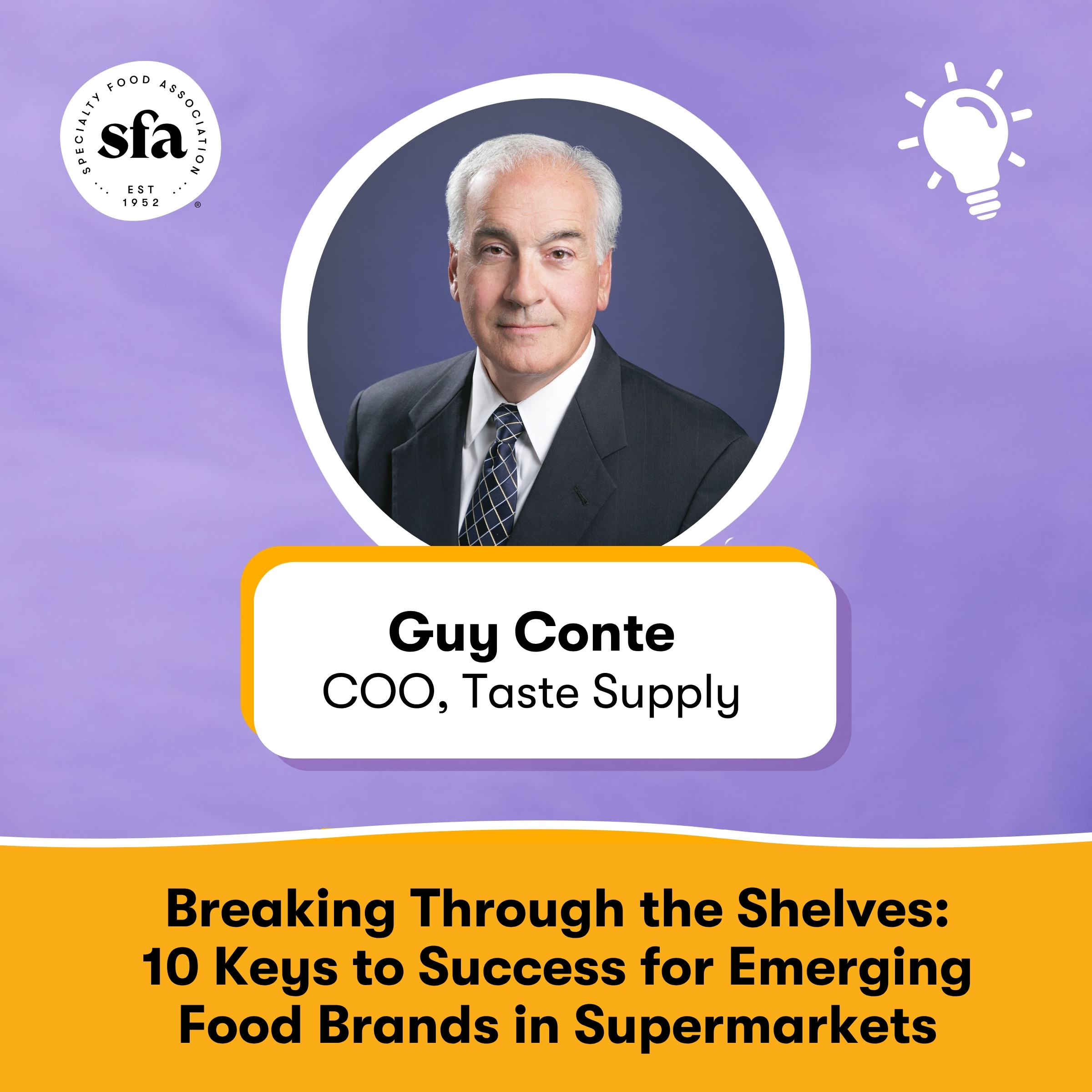
In a recent “In the Know” webinar, longtime supermarket consultant and CPG executive Guy Conte shared lessons from his 40+ years in the industry. The session, Breaking Through the Shelves: 10 Keys to Success for Emerging Brands in Supermarkets, offered a candid roadmap for makers navigating the complexities of retail.
Here are the top three takeaways for food entrepreneurs ready to grow their brand without getting lost in the aisle.
Price for Value, Not Survival
According to Conte, one of the most common mistakes emerging brands make is setting price based solely on cost. While understanding every detail of your cost of goods is essential, he emphasized that price must reflect the value you offer, not just the expenses you’re trying to recoup. He recommended viewing pricing through the lens of customer perception and long-term brand health.
Brand Awareness Must Be Built
A great product alone won’t get you off the shelf. Conte pointed out that even with $40 million in sales, the cookie company he once helped scale only had 9% unaided brand awareness. So how do you stand out? Invest in compelling packaging, influencer partnerships, sampling strategies, and social media that make people remember your product before they even step into the store.
Operational Excellence Is Key
Getting onto retail shelves is only half the battle; staying there means being relentlessly reliable. Conte underscored the importance of tight operational systems, from on-time delivery and clear billing to forecasting, inventory management, and logistics.
“If you're out of stock on a promotion, the retailer gets the blame,” he warned. “They won’t forget it.”
He also urged entrepreneurs to think about the presentation of their sample kits, warning against “brown box and bubble wrap” approaches that undermine professionalism. A well-designed sample box, a clear pitch deck, and clean data sheets can be the difference between a pass and a partnership.
Bottom Line
Breaking into supermarkets isn’t about swinging for the fences. It’s about disciplined, strategic moves that build trust, awareness, and profit. As Conte put it: “It’s a marathon, not a sprint.” With strong margins, standout marketing, and sound operations, emerging brands can do more than make it to the shelf, they can own it.Want to access future sessions like this? Reach out to [email protected] to learn about joining the Specialty Food Association and gaining access to our expert-led webinars, resource hub, and more.
SFA September Member Town Hall
-
In September, SFA joined the “We Pay the Tariffs” coalition in Washington, D.C., advocating for small food businesses impacted by rising import tariffs. The coalition’s efforts received national media coverage, helping elevate the issue and spotlight the challenges faced by SFA members. During the Town Hall, SFA member Cason Crane of Explorer Cold Brew joined to talk about how his company is navigating tariffs today.
Pitch Perfect: The 4 Steps to Perfecting Your Sales Pitch
-
Whether you're preparing to talk to buyers at an SFA Trade Show or crush your next financing meeting, one critical skill makes all the difference: delivering a compelling pitch.
Ali Ball, founder and CEO of Food Biz Wiz, shared her four-step process to building the perfect pitch. Drawing from her experience as a former grocery buyer, Ali provided invaluable insights to help food makers and brands build their pitch.
Step 1: Prepare – Craft Your “Why”
Before reaching out to a buyer or setting foot on the trade show floor, you must be able to offer a compelling reason why a retailer should carry your product. In a sea of incredible and innovative products, being “delicious” or “sustainable” isn’t enough anymore.
Buyers are focused on how new products can enhance sales or margins in a category. “If your product doesn’t help the buyer meet their financial goals, it’s not worth their time,” Ali emphasized.
Your pitch should focus on how your brand solves a problem for the store—not just what makes your product special.
Step 2: Prepping Your Ps
The second step is all about nailing down the five essential Ps that every brand must address in a pitch:- Product – Concisely explain what you are selling. Make sure to include case counts, shelf life, and ordering minimums.
- Placement – Know where your product belongs in the store and who your audience is.
- Pricing – Know your cost of goods, retail margins, and how promotions or distributor cuts affect your bottom line.
- Promotion – Explain your marketing plan and how you will support sales.
- Purchasing – Share how a buyer can purchase your product.
Step 3: Pitch – The Moment
Once you answer those questions, it’s go-time. Whether on a sales call or at a trade show booth, your goal is to introduce your brand and clearly state the benefit to the retailer. According to Ali, a great pitch is only four sentences long:- Introduce yourself and your brand.
- Share a clear product description.
- Cite a compelling stat or trend supporting your category.
- Propose a next step—like sending samples or scheduling a follow-up.
The biggest mistake brands make is giving up after one try. Ali shared a striking stat from HubSpot: while 44% of salespeople give up after one outreach, 80% of yeses happen after the fifth follow-up.
The key is polite persistence. Follow up every two weeks with updates, press mentions, or trend insights until you hear a definitive no.
SFA July Member Town Hall Tariffs Update
-
Leah Scarpelli, partner at ArentFox Schiff, discusses the terms of individual trade agreements announced thus far and the transition to from a standard reciprocal tariff rate to country-specific tariff rates beginning August 1. Read the highlights and subscribe to our LI newsletter to stay up to date with the latest regulatory and legislative news impacting the specialty food world.
Build Your Booth Buzz
-
- Build out your company profile in the Exhibitor Dashboard with product photos, key brand info, product categories, and more. Consider upgrading to a Silver or Gold listing to further enhance your visibility with buyers.
- Promote yourself early using the Exhibitor Marketing Toolkit. Download graphics you can share in email and on social media, and don’t forget to tag @SpecialtyFoodAssociation and use the hashtags #FancyFoodShow and #WeFancy to expand your reach.
- Sponsorship = Visibility. Consider investing in paid sponsorship opportunities—from Spotlight Showcases to push notifications to branding on the Main Stage. These options elevate your visibility and can bring more buyers to your booth.
Using RangeMe Like a Pro
-
SFA has teamed up with RangeMe to offer our members significant discounts and much greater visibility on the popular product-discovery platform.By joining RangeMe at our special-offer price, SFA members can connect with the thousands of retailers who use RangeMe to browse, source, and purchase products, including through new RangeMe Collections dedicated to SFA member companies. Learn more about this SFA Member Benefit.
Follow Up Fuel - Your Post Show Plan
-
Top takeaways:
- Follow-up starts right away. The best time to reach out to new leads is immediately after the show, before your product gets buried in their memory (or inbox). Don’t wait for the “perfect” time. Unless a buyer gave you a timeline, assume they’re open. Stay top of mind with short, weekly emails, and keep going until you hear a clear no.
- “Be more persistent than you think you should be — 2 to 3 times more. You are not bothering them; you are reminding them. They came to the show to meet you.”
- Personal beats perfect. Keep your tone authentic and aligned with your brand. Buyers are people first, and they respond to messages that feel real. If they loved a certain flavor or feature, remind them. Use simple calls to action like, “Where should I send samples?” or “Are you available Tuesday or Thursday for a quick call?”
- Organize so you can prioritize. A strong CRM, which can even be a spreadsheet, helps you sort your leads, track conversations, and flag the buyers most aligned with your current growth stage. Focus on who makes sense for you right now based on your production capacity, distribution, and goals. Don’t chase every lead—chase the right ones.
- Follow-up starts right away. The best time to reach out to new leads is immediately after the show, before your product gets buried in their memory (or inbox). Don’t wait for the “perfect” time. Unless a buyer gave you a timeline, assume they’re open. Stay top of mind with short, weekly emails, and keep going until you hear a clear no.
How I Buy: Live Pitch Practice with Eataly
-
Top takeaways from the buyer’s seat:
- Lead with what matters.
Fabio shared he is looking for mission, product uniqueness, and logistics, but you need to be able to do it quickly. Be clear about packaging specs, allergens, shelf life, certifications, lead time, and whether you self-distribute or work with a distributor. - Your story helps—but your readiness sells.
Buyers love a great founder story, but they prioritize whether you can deliver on your promises. Makers should have a clean pitch that includes details like production capacity, facility type (shared, certified, allergen-free), and how quickly and easily they can onboard you. - Make the buyer’s life easier.
A smooth buyer-vendor relationship is gold. Fabio emphasized that he’s drawn to brands that solve problems—not create new ones. If you have a solid plan around supply chain, pricing, and promotion, you will stand out.
- Lead with what matters.
How to Wow on the Show Floor
-
Top three takeaways:
- Be memorable. Use color, height, and signage to create a visually inviting booth. Personal touches, like custom backdrops, furniture, or even mascots, can help buyers remember you long after the show ends.
- Be engaging. Make eye contact, smile, and get off your phone. Pay attention to badge colors so you know who you’re talking to and use lead retrieval tools to capture info and follow up with confidence.
- Be strategic. Offer a curated selection of samples, serve it fresh, and keep it simple. Quality beats quantity, and a thoughtful sample paired with a clear brand story can open doors.
Breaking Through the Shelves: 10 Keys to Success for Emerging Food Brands in Supermarkets
Speaking with Buyers and Press at the Show