
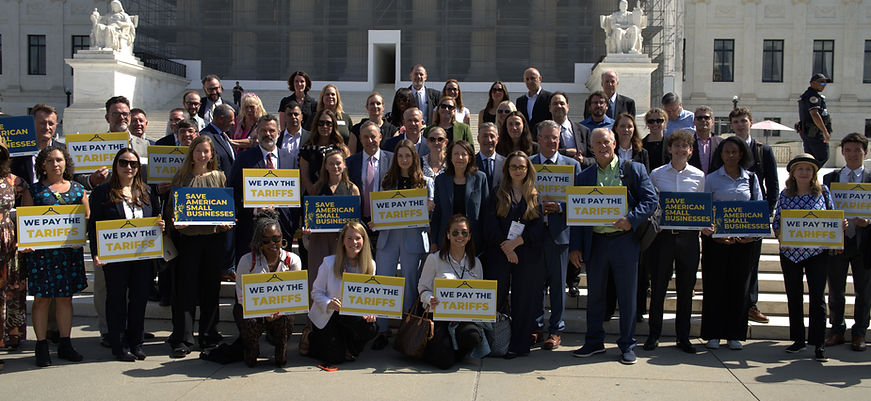
The group’s message was clear: tariffs on ingredients not produced domestically are driving up costs and threatening the viability of small importers and entrepreneurs.
SFA has heard from members consistently that tariffs are the top regulatory/legislative issue on their minds. While in D.C., Delia emphasized the need for bipartisan collaboration, given that specialty food businesses operate across all districts, and introduced SFA as a resource for policymakers seeking to understand the business impact of these policies.
The coalition’s efforts received national media coverage, helping elevate the issue and spotlight the challenges faced by SFA members.
- Sen. Cantwell, small business owners push back on tariffs — video report picked up by nearly 100 local news affiliates throughout the country
- US small businesses slam Trump tariffs as legal fight proceeds — Agence France-Presse article that ran in about 150 outlets
- ‘Impossible to continue.’ Trump tariffs choke Boise company — Idaho Statesman opinion editor report
- Cantwell, NW business owners denounce import taxes — The Spokesman-Review, with additional quotes
Member Story: Brewing Resilience at Explorer Cold Brew
When tariffs began to hit hard, Cason Crane didn’t just adjust, he reimagined. As the founder of SFA member company Explorer Cold Brew, Cason found himself facing steep costs on imported glass bottles and coffee beans, two essentials for his product line. But instead of scaling back, he leaned into the scrappy mindset that launched his business.Cason shared his experience and advice on SFA’s September Member Town Hall, available now to stream on-demand.
“You sort of go back to that drawing board and think of it like every day you're back in those early founding moments,” Cason said. He stockpiled materials before tariffs took effect, hunted for alternative suppliers, and made a bold pivot: launching a new line of canned oat lattes. It wasn’t just a workaround; it was innovation.
Cason also found creative ways to work through the shifting regulations and legislation. Throughout it all, he kept the lines of communication open with vendors, customers, and investors. Despite the challenges, Cason remains cautiously optimistic and leaning into that scrappy mindset that set Explorer Cold Brew apart in the first place.
Regulatory Watch: GRAS Pathway Under Review
Also during the Town Hall, attorney Emily Cowley Leongini of ArentFox Schiff provided a detailed briefing on a potential regulatory shift that could significantly impact food formulation. The Department of Health and Human Services is proposing to eliminate the self-affirmed GRAS (Generally Recognized as Safe) pathway, which currently allows companies to introduce ingredients without notifying the FDA.If enacted, this change would require mandatory FDA notification for all new GRAS ingredients, increasing oversight but also introducing delays and uncertainty. With FDA staffing already stretched thin, concerns about backlogs and lack of grandfathering for existing ingredients are growing.
Emily’s advice for members:
- Begin auditing your ingredient portfolios
- Flag self-affirmed GRAS items
- Prepare for possible FDA submissions.
From Capitol Hill to the production floor, SFA members are showing what it means to adapt, advocate, and lead. If you have questions, feedback, or ideas, we want to hear from you at [email protected].