
By Jim Slama, CEO, Naturally Chicago
Julie Smolyansky remembers her first trade show. She was around 11 years old, wearing little heels, working her parents' Lifeway Kefir booth at the Fancy Food Show. She spotted Lee Iacocca, the powerful auto executive, on the floor with his own daughter, who was launching an olive oil brand.
Michael Smolyansky, her father, was starstruck. He turned to Julie and said that one day she would be running her own company. Not long after, a photo was taken of the automotive legend holding a bottle of kefir.
"That's kind of the beginning of our life in the specialty food industry," Smolyansky recalls. It was also the beginning of a story that would take decades to fully unfold — one of immigration, entrepreneurship, grief, resilience, family conflict, innovation and, ultimately, triumph.
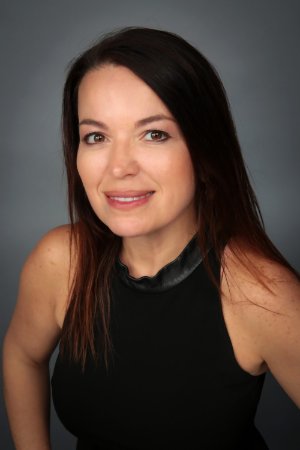
Julie Smolyansky is the longtime CEO of Lifeway Foods. The company her father Michael founded in 1986 is the leader in drinkable kefir in the United States, a category that Lifeway created from scratch.
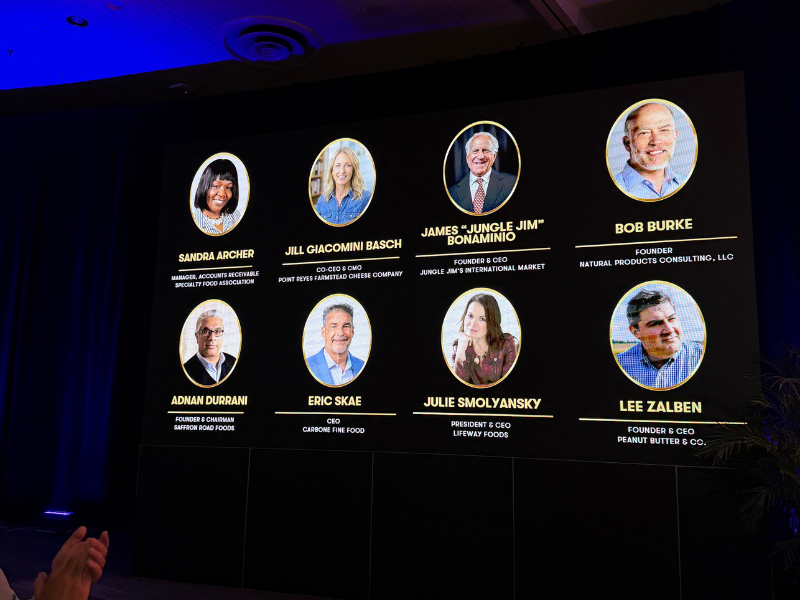
With revenues approaching $250 million and 26 consecutive quarters of growth, Lifeway is riding what Smolyansky calls "the wave." It is a cultural moment in which gut health, probiotics and real food have moved from the fringe of American consumer consciousness to the center. In a recognition of what she calls a full-circle moment, she was recently inducted into the Hall of Fame of the Specialty Food Association, which operates Fancy Food.
But to understand how Lifeway got here and where it is going, you have to understand where it came from.
Kefir, Communism and a Corner in Germany
Kefir is not new — far from it, in fact. Smolyansky describes it as a 2,000-year-old fermented product from the Caucasus Mountains region of Eastern Europe that was consumed across the former Soviet Union, where Smolyansky was born, the way Americans consumed Coca-Cola.
"It was a national drink," she says. "But it wasn't commercialized. There was no branding because it was communism. It was all state-operated, state-run or passed down from grandmothers who kept the culture alive for generations."
Her family left Ukraine, then part of the Soviet Union, as refugees in 1976, when she was 1 year old, through what she calls "a slit in the Iron Curtain" at the height of the Cold War. They settled in Chicago with little money and no English.
Her mother, Ludmila Smolyansky, learned the language by watching General Hospital. She opened the first Slavic deli in Chicago's Rogers Park neighborhood when Julie was 4 — her introduction to the food industry. The store supplied Eastern European foods to the Soviet immigrants and multi-generational Jewish families that had settled in that neighborhood.
The kefir idea itself was born at a trade show in Germany. Her parents wandered into a local grocery store — "the best part of any international trade show is always the grocery store," Smolyansky notes — and her father picked up three bottles of kefir. Standing in that aisle, he said, "America has everything, but it doesn't have kefir." Her mother replied, "You're an engineer. Why don't you start making it?"
Six months later, in 1986, Lifeway Foods was born. Michael Smolyansky, the Ukrainian immigrant and trained engineer, began producing kefir in the basement of his family's home in the Chicago suburb of Skokie, Illinois, and personally introduced the product to local ethnic and health food retailers.
Believing strongly in kefir's health benefits and market potential, he taught himself the fundamentals of public markets and in 1988 — just two years after launching the company — took Lifeway Foods public on NASDAQ, becoming one of the first immigrants from the Soviet Union to lead a U.S. company through an IPO.
And at the same time, the American health food industry was beginning its own rise. Whole Foods Market, Wild Oats and food co-ops were expanding nationally, and a new generation of consumers was starting to think differently about what they ate.
Today, nearly four decades later, gut health has become one of the most powerful trends in food, probiotics have entered the mainstream, and consumers increasingly view food as medicine, a critical part of their overall health strategy.
The federal government dietary guidelines recommend dairy — including yogurt and kefir — as nutrient-dense sources of protein, calcium, vitamin D and other essential nutrients, while federal nutrition research and education efforts have highlighted the potential digestive and microbiome benefits of fermented foods.
The ideas that Lifeway spent decades championing have become central to the national conversation.
Stepping Into an Impossible Situation
Julie was just 27 when her life was changed indelibly by her father's unexpected death. "It was horrific," she says plainly. "The ground was falling underneath me." She became CEO almost immediately, throwing herself into work as a coping mechanism. In doing so, she became the youngest woman ever to lead a publicly traded company in the United States — a distinction she admits she didn't fully appreciate in the moment.
"The more time that goes by, and the more I see young women come up to me and tell me how my story gave them confidence to go do whatever amazing thing they want to do. That's when I really understood it," she says. She views the platform it gave her as an obligation: to speak up about gender disparities, to mentor the next generation, and to make sure the pain of that period wasn't in vain.
Her father, she says, always taught her that the world would punch her and she had better punch back.
She did.
Building the Category, Then Building a New One
For the first decade or so of her tenure, Smolyansky made a decision that in retrospect looks like brilliant strategic restraint. Lifeway had two core products: drinkable kefir and farmer cheese, a soft, unripened Slavic cheese similar to blended cottage cheese. Rather than try to grow both simultaneously, she focused almost entirely on the drinkables and left farmer cheese to thrive quietly in Eastern European delis and ethnic grocery stores.
"I can't do everything at the same time," she explains. "If I don't focus, then nothing is successful." She poured capital into expanding the kefir line and got it into Whole Foods, Walmart, Costco, Target and other club stores, building it into a mainstream product. Meanwhile, she waited. For years she told her team to quietly expand farmer cheese production capacity — buy more machinery, build out the infrastructure — because she knew the moment was coming.
Then cottage cheese went viral on TikTok. People were blending it, adding it to recipes, praising its protein content. Smolyansky watched it happen with something close to satisfaction.
"Farmer cheese is already blended cottage cheese," she says. "It's a hack for recipes. We've been waiting for this moment." She sent product to Bethenny Frankel, an entrepreneur and TV personality, who took to her platform and started topping the farmer cheese with caviar.
The GLP-1 movement subsequently accelerated demand for high-protein real foods. And suddenly, the silent gem Smolyansky had been patiently holding in reserve was ready.
Today, Lifeway farmer cheese is in all Walmart locations and Albertson's, with new retailers signing on daily. Walmart's message to Lifeway: As much as you can make is as much as we will take.
"We are going to be the leader of two categories that we have created and brought to the marketplace," Smolyansky says. "I am really proud of that."
Innovation, Social Media and Staying Relevant for 40 Years
One of the underappreciated chapters in Lifeway's history is how early Smolyansky embraced social media. Lifeway was reportedly the fourth brand on Twitter and among the first on Facebook — not because of a sophisticated digital strategy, but because Smolyansky was young and her friends were already there.
"I saw Facebook as a town center, sitting around the fire and sharing how to live better," she says. "Kefir survived by word of mouth for 2,000 years. I saw social media as the same thing." Vogue magazine later described Lifeway's early social media presence as creating an "avant-garde status and cult-like following."
That instinct for meeting consumers where they are has continued to shape the company's innovation pipeline. Lifeway recently launched Muscle Mates, a kefir-based drink with creatine that is already heading into 2,000 Walmart stores. Collagen kefir and colostrum kefir round out what Smolyansky calls "the three C's."
New flavors such as matcha latte, taro ube and passion fruit reflect where younger consumers' palates are heading. The company has partnered with the Joe and the Juice fast casual chain, built collaborations with fitness concepts, and activated around the Super Bowl with Chicago Bears players D'Andre Swift and Colston Loveland.
This month Lifeway is launching a probiotic kefir butter. It is the first of its kind, already approved at Target.
"I think today's consumer has much more grace with themselves," Smolyansky says. "It's not about what you're going to remove from your diet. It's about what you're going to eat to fuel what you want to do in your life."
The Danone Battle and a New Era
For years, the French food giant Danone held a significant stake in Lifeway — a relationship Smolyansky describes carefully with evident restraint. What she is open about was the attempt earlier this year, which she vigorously opposed, of Danone to acquire or otherwise control the company. She refused.
Danone then reversed course and executed the complete liquidation of their Lifeway holding, a process that has consumed much of this year for Julie. But the outcome was unambiguous in her mind.
"Total victory," she says. "I was very happy with the conclusion."
The exit opens a new chapter: a fresh investor pool, new strategic opportunities and the freedom to continue building without the weight of that conflict. The timing coincides with Lifeway's best-ever quarterly results. One recent week of sales, she notes, exceeded the entire year's revenue from when she first joined her father at the company.
While competitive challenges are expected in business, some of Smolyansky's toughest battles came from battles within her own family.
Family businesses are often romanticized as stories of shared purpose and legacy. The reality can be far more complicated. Over the years, Lifeway became entangled in very public disputes involving Smolyansky family members whose visions for the company diverged dramatically. Smolyansky found herself making difficult decisions that carried both professional and personal consequences. She describes the experience as painful but necessary. Her responsibility, she believed, was not to any individual family member but to the long-term health of the company.
And with that philosophy as her guiding light, the company is thriving.
A 40th Anniversary and What Comes Next
Lifeway celebrated its 40th anniversary this year. National Kefir Day fell on June 18, and Lifeway hosted a special celebration in New York City, complete with a pop-up event and a performance by Cannons, a high-energy DJ set. It was also recognized by Time magazine as the second-fastest-growing company in food and beverage in America.
Products in the pipeline for 2027 are already exciting her team, though she won't reveal details, saying only that they're "going to be fire."
As a child, she walked the Fancy Food Show alongside her parents. She watched entrepreneurs build brands and dreamed about what was possible. Today, she stands among the industry's most influential leaders. As a member of a Jewish refugee family from Ukraine that arrived in America with $116 and speaking limited English, the journey is remarkable.
But Smolyansky is not interested in looking backward for long. New products are launching. New retail partnerships are forming. The company is posting record sales and entering what she believes may be its strongest era yet.
Smolyansky's personal pride, though, centers less on the revenue milestones than on the human ones: the 500 families whose livelihoods depend on working in Lifeway's manufacturing operations and corporate offices; the woman who called years ago to say she'd canceled surgery for Crohn's disease after kefir relieved her symptoms; the daughters she has raised while building the company, taking them to trade show floors as infants and teaching them what she learned at age 4 in her mother's deli.
"We're just hitting our stride," she says.
After everything she has endured — from personal loss to family conflict to corporate battles — those words carry particular weight. Many leaders inherit businesses. Few transform them. Forty years later, that culture is on the shelves of every Walmart in America.
The American dream, Smolyansky would say, is alive and well.